

Latest Design Ideas
The Latest
Designers Reveal the “Tackiest” Decorating Trends From Every Generation
No era is immune to regrettable design decisions.
Most of us feel a sense of nostalgia for certain antiques and home decor pieces that bring back childhood memories. But there’s another side to that nostalgia: generational design trauma. This happens when the colors, materials, or decorating styles that dominated our upbringing become so overexposed that seeing them today makes us cringe. Whether it’s carpeted basements, glass-block showers, or endless greige walls, nearly everyone can point to design trends from their youth they vowed would never make it into their own homes.
“Design trends are cyclical—each generation tends to react to the one before,” says Brad Thornton, a New York–based interior designer and the founder of Thornton Projects. “Conservative eras are followed by expressive ones. Restraint gives way to excess. Periods defined by natural materials and soft forms are often followed by eras of contrast and structure. This push and pull has been playing out for decades.”
Designer Sasha Bikoff agrees, drawing on her own personal experience. “I am a millennial, and so I grew up in a design era with very little identity,” she says. “We were coming off of the glamour and maximalism of the 1980s into the minimalism of the 1990s, but oftentimes, the interiors lent to this transitional, confused aesthetic. The paint color of choice was always in the whites, and so it has led me to feel like white paint can often feel unfinished. When choosing white, I steer clear of anything that feels chalky, dull, or too vanilla.”
Ahead, design professionals reveal the decorating trends that each generation would be happy to leave in the past.
Baby Boomers
Born 1946–1964
GraphicaArtis
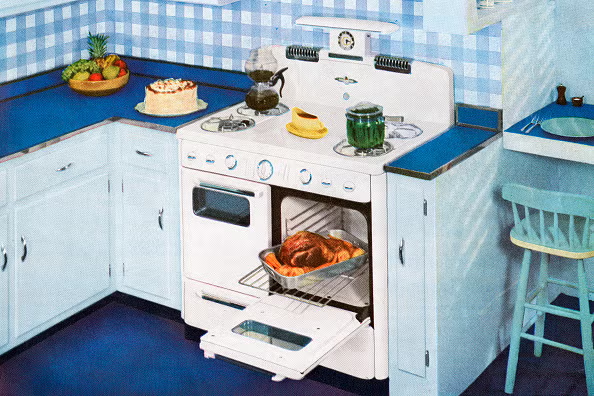
Baby boomers grew up in a midcentury world of plastics, metallics, and futuristic design.
After growing up in the Mad Men era, many members of this generation built family homes that looked like The Brady Bunch.
“Baby boomers came of age during a postwar pastel wonderland with a heavy dose of midcentury optimism,” says Thornton. “Baby blues, dusty pinks, and plywood intermixed with the metallics, bright orange, and hard plastics of space age futurism. This period gave us modern icons like Verner Panton’s Panton chair and the bachelor-pad favorite Eames lounge chair. ‘Cutting edge’ engineered materials like vinyl, Formica, and linoleum made their way into the home, alongside the first consumer-geared televisions (and their unseemly TV trays).
“But as boomers aged into homeownership, many gravitated back toward natural materials and earthier palettes, pushing against the artificial preferences of the 1950s and early 1960s,” Thornton adds.
Related Story
Gen X
Born 1965–1980
getty
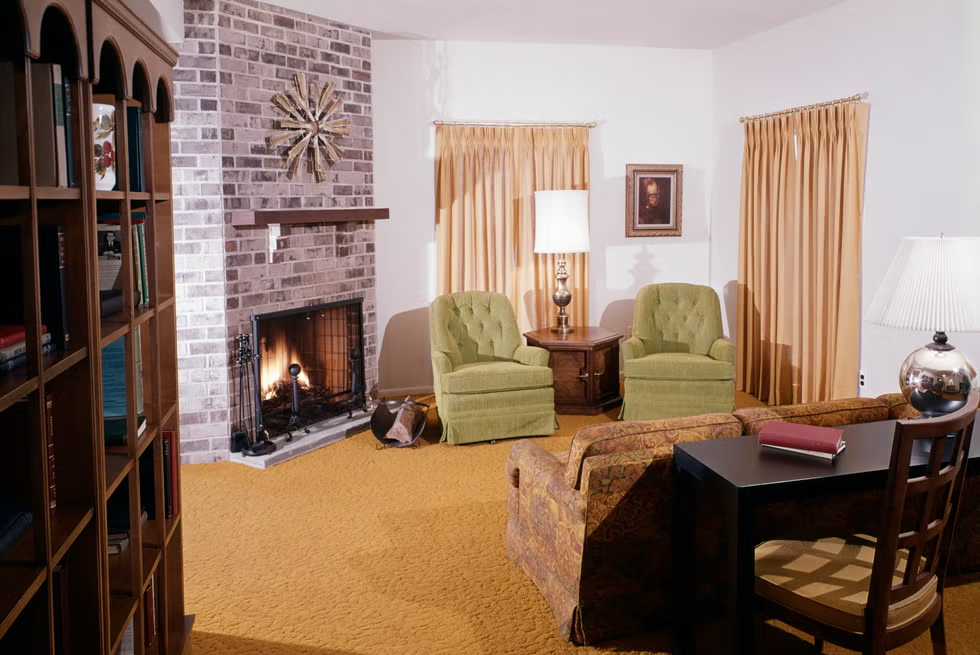
Gen Xers were inundated with 1970s-style earth tones in their youth.
When the latchkey kids of this generation let themselves into their homes, they were surrounded by earth tones.
“Golds, rusts, and avocado reigned supreme with wood paneling, mirrored surfaces, and psychedelic patterns as a mainstay,” says Thornton. “Florals found their way into everything from kitchen tiles to wallpaper. Wall-to-wall carpeting (often shag) invited people to get comfortable (and trapped the ever-present cigarette smoke).”
The colors of this particular era are derided to this day, agrees designer Becky Shea. “Gen X decisively moved away from some of the baby boomer era’s hallmark palettes: namely the saturated harvest tones of the 1970s: burnt orange, avocado green, and mustard yellow,” she says. “These colors, while nostalgic to their parents, felt dated and heavy to Gen Xers, who largely embraced more muted, understated palettes in response—think soft taupes, minimalist grays, and deep, inky blues. It was a generational shift away from earthy psychedelia toward a cooler, more pared-down sophistication.”
Related Story
Millennials
Born 1981–1996
ClassicStock
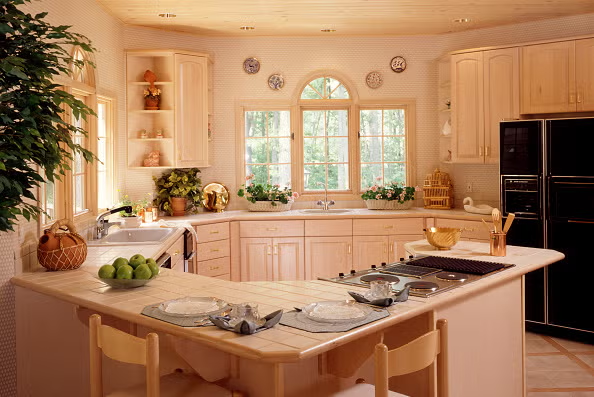
Millennials have roundly rejected the bold, in-your-face aesthetic of the late 1980s and early 1990s in favor of neutral, calming aesthetics.
Having left behind the goldenrod and avocado-colored split-level ranch homes of their childhood, Gen Xers transitioned into McMansions when they became parents themselves.
“Millennial childhoods coincided with an era of economic prosperity where displays of wealth were nothing to be ashamed of,” Thornton says. “The excess of the late ’80s favored heavy drapery, lacquer, and entertainment centers the size of a small car. By the early ’90s, the look softened a bit but maintained a desire to keep up a worldly appearance.”
And the excess wasn’t limited to just the living spaces. “I have two words for you: Tuscan. Kitchens,” Thornton continues. “This McMansion favorite leaned into orange-toned woods, buttercream-colored faux finishes, and terracotta tiles.”
And when those Millennials grew up, they said goodbye to all that. “Millennials have a pretty strong aversion to the bold, kitschy colors that defined much of the late ’80s and early ’90s,” says Shea. “The loud, geometric, almost cartoonish design elements of the era feel chaotic compared to the calming, neutral environments millennials tend to favor today. In many ways, millennials rejected the visual noise of that period, opting instead for muted earth tones, soft minimalism, and a more curated, intentional approach to interiors. For us, it’s less about making a loud statement and more about creating spaces that feel serene, grounded, and authentic.”
Related Story
Gen Z
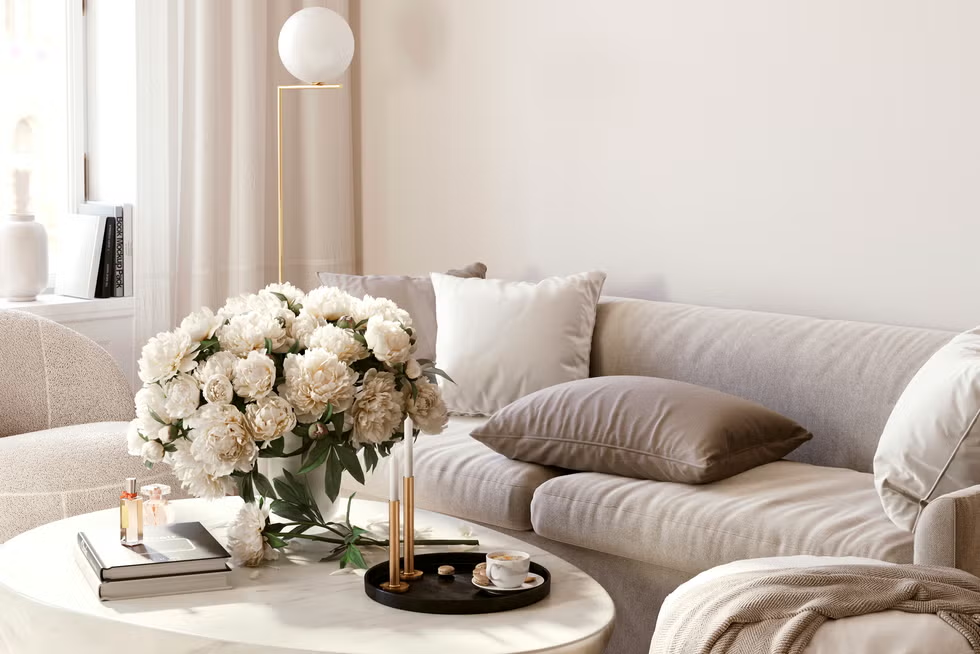
The minimalist interior styles that millennials saw as universally flattering, Gen Z now rejects as bland and lifeless.
Born 1997–2010
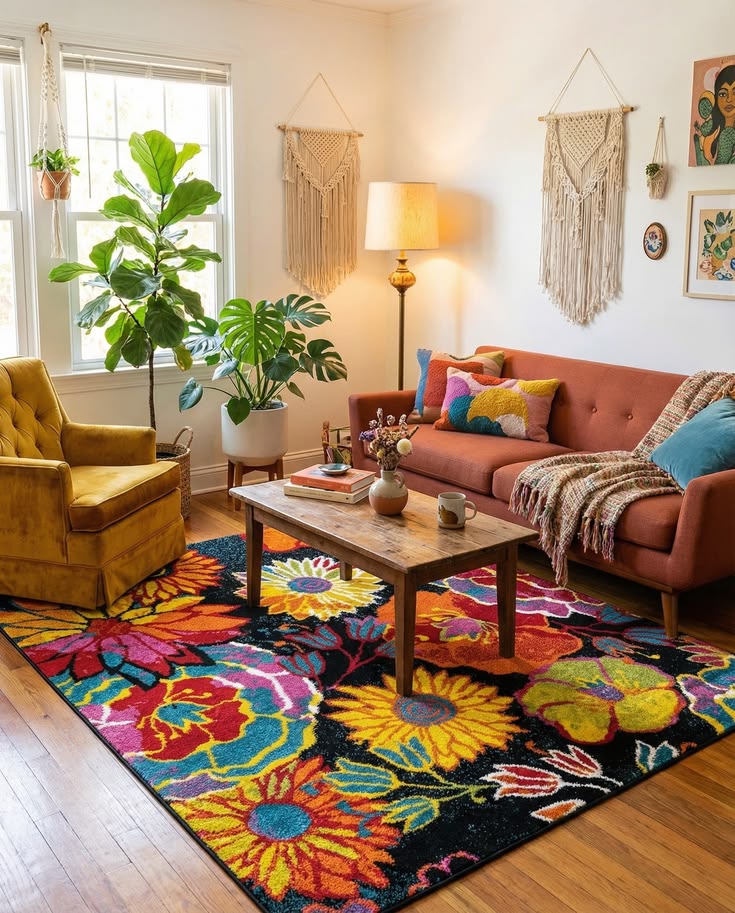
Of course, one generation’s authentic is the next’s so boring I’m dying inside. “Gen Z was born into a world of 50 shades of greige,” says Thornton. “Somewhere along the line, we lost the plot, and bright white walls, gray vinyl flooring, and farmhouse shiplap became the uniform for starter homes and mid-priced Airbnbs alike. Scandinavian minimalism, ashy light woods, and matte black fixtures were suddenly everywhere. As Gen Z comes of age, they’re pushing back against this homogenous look, favoring checkered patterns, intentionally quirky motifs, and bold colors in high contrast.”
Shea understands where her generation was coming from when creating greige interiors that “while safe and neutral, often felt flat, sanitized, and a little lifeless,” she says. You could chalk it up to the economic and geopolitical instability millennials came of age in; gray felt like a palette of caution, a way to play it safe in uncertain times. But to Gen Z, it likely reads as bland, boring, and creatively stifled. In contrast, Gen Z is leaning hard into vibrant colors, eclectic styling, and spaces that feel personal and expressive—a clear rejection of the muted minimalism that dominated the millennial era.”
Related Story
Gen Alpha
Born 2010–2024
YKvision
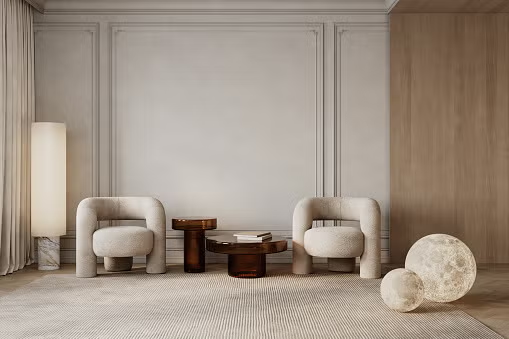
Time will tell what designs Gen Alpha will come to see as clichéd—but something tells us that today’s ubiquitous, chunky furniture will be a major ick for them.
The oldest members of Gen Alpha—who are now officially teenagers—are already beginning to critique their parents’ design choices. According to designers, this generation is likely to push back against the neutral, homey aesthetics that emerged during the 2020 pandemic, instead embracing a more optimistic and expressive design approach as it continues to gain momentum.
“Emerging from quarantine into a culture obsessed with sharing home life online, Gen Alpha is growing up in highly curated, soft neutral spaces,” says Thornton. “Contemporary preferences lean toward organic shapes and schemes that blend Japanese and Scandinavian influences. Decor objects pull from nature, with perfectly imperfect earthenware ceramics and paper lanterns. Inoffensive warm neutrals like beige, cream, sage, and blush are ever-present, and the ivory bouclé trend refuses to die. Color-drenching rooms can be beautiful but will likely become highly identifiable with this particular time period.”
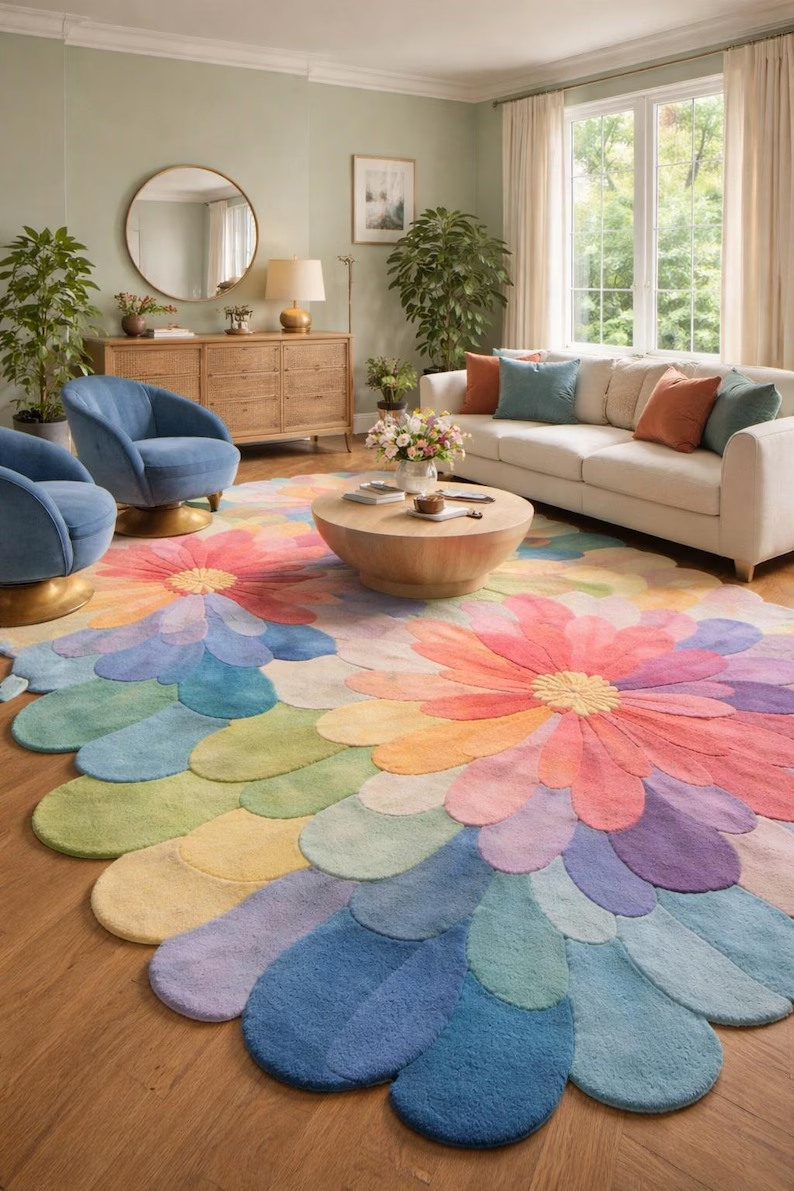
Shea envisions this generation expanding late Gen Z’s “more playful, expressive spirit back into design. Colors like soft yellows, lilacs, and bold purples feel fresh, joyful, and approachable, a clear shift from the more muted, cautious palettes of earlier generations.”
She predicts that this individuality and expressiveness in design are here to stay. “Even if Gen Alpha eventually moves toward something new, they’ll likely recognize that Gen Z helped to break open the door for more emotional, personality-driven spaces,” she says. “It marks an important psychological shift: design becoming less about playing it safe, and more about embracing individuality and optimism.”
But we’re sure they’ll find something in the current design world to uniformly despise as well… perhaps the bouclé chair.